What Is Raffia Bag? How Long Do Raffia Bags Last?
Raffia is a highly distinctive natural weaving material. If you are looking for a material suitable for making lightweight, casual style and natural summer bags, it will be an excellent choice.
Raffia is not only used to make traditional handicrafts such as baskets, hats and ropes due to its natural strength and flexible durability, but also has become an emerging material for modern sustainable design and industrial applications because of its environmental advantages of being renewable and biodegradable.
Raffia is also a good material for making bags. Are you looking for an environmentally friendly material to make bags?
This post will explore the features of raffia, its durability in making bags, and methods to increase the lifespan of raffia bags.
What is raffia?
Raffia is a natural fiber extracted from the leaves of a type of palm tree unique to Madagascar (the wine palm). It is a material with a long history and wide applications, renowned for its unique texture, flexibility and sustainability.
The Rafia palm tree mainly grows in parts of Africa and Asia. The leaves of these trees are long and thin, and after being dried in the sun, they form slender fiber bundles.
Origin & Source
- Botanical identification: Belongs to the Arecaceae family, especially the Raphia genus (about 20 species).
- Origin: Madagascar (with the highest yield), tropical Africa and parts of Central and South America.
- Tree characteristics: It can grow up to 16 meters tall and has the largest leaves in the plant kingdom (some are 25 meters long and 3 meters wide).
Core features
- Natural and renewable: As a plant fiber, it is an environmentally friendly material and biodegradable.
- Strong and flexible: The fibers have excellent strength and durability, making them suitable for weaving complex structures.
- Lightweight: The fibers themselves are very light and have a low density. The items made from them (such as hats and bags) are lightweight and easy to carry.
- Soft and easy to shape: Soft when unprocessed, it can be easily woven or shaped after being moistened, and can be set after drying, making it very suitable for hand weaving.
- Unique texture: It features a natural matte luster and distinctive linear texture, endowing the product with a simple and natural appearance.
- Degradability: As a natural material, raffia can be completely decomposed in the natural environment, offering significant environmental protection advantages.
Main uses
Handicrafts and fashion
- Woven products: Widely used in the production of baskets, cushions, ropes, carpets, hats, bags, storage boxes, etc. Their natural textures endow the products with a unique handcrafted feel.
- Clothing accessories: raffia fibers are processed into belts, shoes, etc., which are both durable and fashionable.
- Home decoration: Woven into furniture (such as chairs, cabinet door panels), wall decorations or lamps to create a natural atmosphere.
- Fashion: In recent years, it has been widely used to make summer handbags, sandals and ornaments. Its natural “vacation style” texture is very popular. It is also often used as a decorative tie or an auxiliary material for floral arrangements at weddings and events.
Agriculture and horticulture
- Plant support: Fibers can be used to bind or support garden plants because of their flexibility, which will not damage the stems.
- Packaging material: As an eco-friendly packaging tape, it can replace plastic ropes and reduce pollution.
Tradition and culture
In regions such as Nigeria, raffia long leaves were once used as fishing rods, demonstrating their versatility.
The weaving technique of fibers has historical inheritance value in African culture and is often used in the production of rituals or daily necessities.
Historically, indigenous communities in Africa and Asia have used it for centuries. In some cultures, it is called “love grass” or “wishing grass”, symbolizing lasting love and good luck.
The key difference from leather
Compared with the leather materials you previously focused on, the essence of raffia is completely different:
- Source: Leather is derived from animal skins (or imitated through biotechnology), while raffia is pure plant fiber.
- Characteristics: Leather pursues firmness, wear resistance and a lustrous leather feel. Raffia grass offers a light, breathable, and woven natural plant texture, highlighting a more casual and handcrafted style.
Comparison with other natural fibers
Compared with jute and flax, raffia is softer and more suitable for fine weaving. Jute, on the other hand, is coarser and harder, and is often used for heavy packaging.
Compared with sisal, raffia fibers are finer and more elastic, making them suitable for making lightweight items. Sisal, due to its high strength, is often used in ropes or carpets.
The differences between Raffia, grass/straw weaving, and rattan/wicker weaving
Raffia, common grass/straw weaving, and rattan/wicker weaving are all natural weaving materials, but they have distinct differences in raw materials, characteristics, and uses. The core distinctions are as follows:
| Feature Dimension | Raffia | Grass/Straw Weaving | Rattan/Wicker Weaving |
| Source Material | Veins from the leaves of the Raphia palm. | Various materials like corn husks, water grass, wheat straw, etc. | Stems (rattan core or peel) of climbing plants from the palm family. |
| Key Characteristics | Long fibers, soft, pliable, with a natural sheen. | Varies by material; generally stiffer and more rustic. Corn husks are rougher, wheat straw has a better sheen. | Hard, structurally strong, very durable, with good shape retention. |
| Texture & Style | Fine, tight weave, suitable for intricate work. Style is refined, casual, vacation-like. | Relatively coarse, natural texture. Style is more casual, rustic. | Clear, three-dimensional texture with strong structural appeal. Style is casual yet premium. |
| Strength & Durability | Flexible and tensile, but finished bags are often not suited for heavy loads (recommended capacity <1kg). | Moderate strength; durability depends on the specific grass and craftsmanship. | Very sturdy and durable, offering the best load-bearing capacity of the three. |
| Water Resistance | Not water-resistant. Avoid washing; moisture can cause fading and deformation. | Varies by material: Water grass has good water resistance; corn husks, wheat straw, etc., are susceptible to moisture. | Has some water resistance; can be cleaned with a damp cloth. |
| Common Products | Handbags, hats, decorative items, fashion accessories. | Handbags, baskets, home decor. | Handbags, furniture (chairs, baskets), sturdy household containers. |
In short, if you want to choose a delicate, soft and vacation-themed bag, raffia is an ideal choice. However, it needs to be well maintained to avoid weight and water contact. If you are in pursuit of ultimate durability and structural sense, such as frequently carrying heavy items or preferring a stiff bag style, then rattan weaving material is more suitable. Straw bags, on the other hand, offer the richest variety of natural textures and more cost-effective casual options.
What is Raffia Bag?
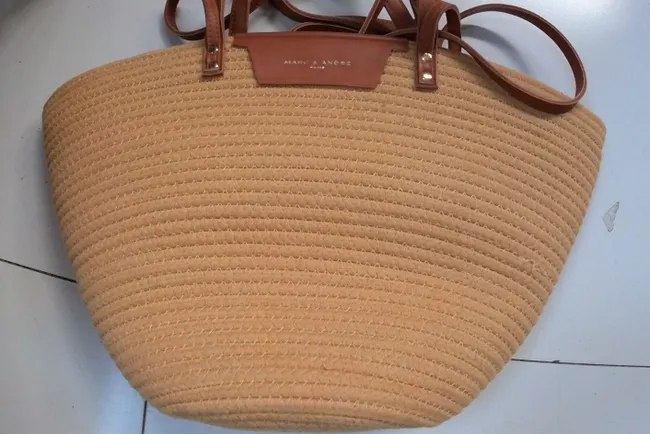
A raffia bag is a type of bag made of raffia fiber, most commonly woven or crocheted, and is used as a fashionable or practical accessory.
What is the raffia bag made of?
- Natural raffia: Raffia palm leaf fiber (matte, earthy, eco-friendly)
- Synthetic raffia: Plastic fibers that look like raffia (more durable and waterproof)
The features of raffia bag
| Aspect | Characteristics |
| Material & Texture | Natural palm leaf fiber. Lightweight, breathable, with a warm, rustic matte sheen and distinct hand-woven texture. |
| Style & Positioning | Casual, vacation-style, Bohemian, common in spring and summer. Ranges from folk handicrafts to use by luxury brands like Prada and Chloé. |
| Craftsmanship & Sustainability | Often hand-woven, supporting traditional crafts and social enterprises. The material itself is renewable and biodegradable, with an eco-friendly production process. |
| Durability & Care | Flexible but not water-resistant. Moisture may cause fading or deformation; machine washing is not recommended. Has average load-bearing capacity and is not suitable for very heavy items. |
Why choose raffia bag?
- Eco-friendly: Supports sustainable practices and reduces reliance on plastic.
- Versatile: Pairs well with all kinds of clothing, from casual to formal.
- Unique texture: Add natural and organic elements to any look.
- Durable and long-lasting: As long as it is properly maintained, a lotus leaf bag can become an eternal touch in your wardrobe.
Why do people use raffia bags?
Summer and beachwear are in vogue
Natural raffia bags are environmentally friendly
Fashionable, handcrafted, breathable
Strong enough for daily lighting use
Popular examples:
Prada’s Raffia Bag (a “New IT Bag” that became a summer essential)
Longchamp’s Le Panier Pliage XL Basket Bag
THE ROW’s Oregon bag
Kate Spade’s Manhattan and Eden bags
Muzungu Sisters’ raffia bags (priced around £230)
Is Raffia Bag Durable?
Yes, raffia bags can be very durable, but how long they can last depends on their materials and usage methods.
The main manifestation of the durability of raffia bag
- Natural material properties: Raffia fibers are derived from the leaves of raffia grass and naturally contain resin components, which endow them with flexibility and tensile resistance. This material is not only lightweight and breathable, but also can resist a certain degree of wear and tear. Even after long-term use, it can maintain a good condition. For instance, raffia woven bags native to Africa are widely used in travel scenarios due to their high toughness and durability.
- Process upgrade enhances durability: Modern weaving technology significantly improves the structural stability of the bag body by optimizing the fiber interweaving method and combining with the inner lining reinforcement design. Some brands also blend raffia with recycled materials or organic fibers, maintaining the natural texture while further enhancing durability, making the bags fashionable items that can be used for a long time.
- Actual usage verification: User feedback shows that high-quality raffia bags can last for several years under normal use. For instance, some users shared that their raffia straw bags still look good after ten years of use and have sufficient capacity for short trips. Some brands also offer lifetime maintenance services, which indirectly confirms the product’s confidence in durability.
- Proper maintenance can extend the lifespan: Avoid prolonged exposure to direct sunlight or soaking in water, and regularly clean the dust with a soft-bristled brush. This can effectively extend the service life of raffia straw bags. The correct maintenance method can maximize the advantages of its natural material.
The advantages and disadvantages of natural raffia bags
Advantages
Made of palm fibers, it has astonishing strength
Suitable for light or moderate use, such as shopping or daily casual wear
Disadvantage
It is less durable under very humid or heavy-load conditions
Will rough handling stretch or wear out over time
If you use the bag gently most of the time (for example, going to the beach, a light errand), natural raffia is the best.
The advantages and disadvantages of synthetic raffia (such as plastic-based) bags
Advantages
Usually more waterproof
Over time, better maintain shape and weight
Not easy to wear out or break
Disadvantage
It is not as environmentally friendly as natural marijuana
Synthetic raffia bags are usually more durable for daily use and heavier loads.
Tips for maximizing durability
- Avoid overloading: Do not load very heavy items
- Keep as dry as possible: Natural raffia will weaken after soaking
- Proper storage: Lay flat or hang up. Do not crush
- Gently clean: Do not scrub hard
The Durable of Natural Raffia and Synthetic Raffia
| Feature | Natural Raffia (Raffia Palm Fiber) | Synthetic Raffia (Polypropylene / PP) |
| Source | Fiber from the leaves of the raffia palm tree. | A type of plastic polymer (polypropylene). |
| Primary Use | Fashion handbags, hats, decorative accessories. | Industrial and agricultural packaging (e.g., feed, fertilizer bags). |
| Durability Profile | Moderate & Delicate: Flexible and can be long-lasting with proper care, but is not waterproof and is susceptible to moisture, crushing, and UV damage. | Very High & Tough: Engineered for strength, high puncture resistance, and often treated to be waterproof and UV-resistant. Designed to carry heavy loads (e.g., 25-50 kg). |
| Care Requirements | Requires gentle care: keep dry, avoid overloading and prolonged sun exposure, and store properly. | Virtually maintenance-free for its intended heavy-duty use. |
How to care for natural raffia bags
- To maximize the lifespan of the natural raffia fashion bag, please follow the care suggestions:
- Keep dry: It’s not waterproof. Avoid rain and spills. If it is damp, keep it away from direct heating and air dry it.
- Avoid overloading: Do not use it as a handbag to hold heavy objects (such as laptops or books), as this will distort the weaving.
- Proper storage: Keep in a cool and dry place, and fill with thin paper to maintain its shape.
How to Improve the Durability of Raffia Bag?
To enhance the durability of the raffia bag, a series of measures can be taken, including strengthening high-stress areas, increasing protective treatment and adjusting usage habits to protect it from environmental pressure, reinforcing weaknesses, and implementing appropriate care measures to extend its service life.
Before purchasing, you should choose a good raffia bag
Choose high-quality raffia
Choose bags made of natural and high-quality tobacco fibers. Compared with synthetic fibers or low-quality substitutes, these fibers are more durable and wear-resistant.
Choose bags that are tightly and evenly woven. A well-woven bag is unlikely to come apart or develop holes over time.
Check whether the edges and seams have been reinforced
Make sure that the edges and seams of the bag are reinforced with additional stitching or different materials. This helps prevent wear and tear and extends the service life of the bag.
Some bags may have leather or fabric borders on the edges, which can provide additional durability and a sense of fashion.
Consider the design and structure of the bag
Choose a bag with a sturdy base and handle. A flat and reinforced bottom can prevent the bag from sagging or deforming when filled with items.
Handles made of durable materials such as leather or thick tobacco that are firmly connected together are less likely to break or tear.
The raffia bag is reinforced before use (crucial for its lifespan)
These steps address the weak links before regular use and prevent early wear and tear.
Strengthen the high-stress area
- Shoulder straps and handles: Add a layer of durable and lightweight fabric (such as canvas, cotton straps) or artificial leather decoration (using vegetarian-friendly glue such as PVA or fabric adhesive) along the edge and attachment points of the shoulder straps. To achieve additional strength, it is hand-sewn with strong thread (polyester or cotton-covered polyester).
- Bottom of the bag: Use hard inserts (for example, a thin piece of cork, recycled cardboard covered with waterproof fabric, or a plastic base shaper) to distribute weight and prevent stretching. Glue or sew a fabric patch to the outside of the bottom to prevent wear and tear.
- Openings and seams: Reinforce the seams with thick thread and extra hand sewing thread (especially where the strap is attached to the bag). For drawstring bags or open bags, add a layer of fabric or leather to the edge of the bag to prevent wear and tear.
Waterproof treatment (only applicable to natural raffia)
Use plant-based waterproof sprays (such as beeswax spray, soy wax paint) or transparent water-based sealants (such as Mod Podge). First, test in a small concealed area to prevent the natural fibers from discoloring.
A DIY option is to melt a small amount of beeswax (or soy wax) with a little coconut oil and then gently brush it over the raffia – this can increase water resistance without hardening the fibers.
Daily care and usage of raffia bag
Avoid overloading the bags
Although raffia bags are durable, they also have their limitations. Avoid carrying heavy objects to prevent stretching or damaging the fibers.
Evenly distribute the weight inside the bag to prevent specific areas from being scratched.
Protect it from moisture and sunlight
- Keep dry: Water can weaken the fibers of raffia leaves, causing warping.
- Avoid prolonged exposure to sunlight: Ultraviolet rays can cause fibers to dry out and fade.
- Store away from damp places: A damp environment can cause mold or unpleasant odors.
Take your bag carefully.
When opening or closing the bag, do it gently to avoid unnecessary pressure on the zipper, buckle, or other closures.
Avoid dragging the bag on rough surfaces as this may scratch or damage the raffia fibers.
Long-term maintenance of raffia bag
Clean the bags regularly
Gently remove the dust and dirt on the surface of the bag with a soft-bristled brush or a damp cloth.
For more stubborn stains, you can use a mild soapy solution and a soft cloth to gently scrub the affected area. Be sure to rinse off the soap thoroughly and let the bag dry completely before use.
Store properly
When not in use, store your raffia bags in a cool and dry place, away from direct sunlight and moisture.
Consider covering the bag with a dust-proof bag or a soft cloth to prevent dust and scratches.
Avoid placing the bag in narrow Spaces, as it may be flattened or deformed.
Repair minor damages in a timely manner
If you find any wear, loose threads or small holes in your raffia bag, deal with them in time to prevent further damage.
You can use needles and threads to repair small cracks or reinforce loose seams. If a more extensive repair is needed, you may consider sending the bag to a professional shoe repair shop or leather repair shop.
Advanced handling methods to enhance the durability of raffia Bags (for the convenience of users)
If you prefer the basic forging process, these upgrades can significantly enhance durability:
Add lining
Sew a lightweight and durable fabric lining (such as cotton, linen, or recycled polyester) inside the bag. This can prevent items from being torn and adds an extra layer of moisture-proof protection.
Reinforce the weaving gap
For loosely woven bags, use a needle and the matching thread to sew some small, invisible loops on the adjacent fibers to “tighten” the gaps in the fabric. This can prevent the fabric from stretching further.
Apply a layer of transparent coating (for synthetic imitation raffia)
If you have a paper bag (imitation), spray it with a transparent acrylic sealer (matte or glossy) to increase water resistance and prevent tearing. Note: It is not recommended to use natural raffia leaves as they can harden the fibers.
Improve the Durability of Natural Raffia and Synthetic Raffia bag
Manufacturer: Develop durable synthetic raffia
If you are involved in the production of synthetic raffia bags for transportation or storage, achieve durability in the manufacturing process. Research focus:
- Improving material formula: Mixing polypropylene with other polymers can enhance toughness and elongation without overly sacrificing strength.
- Adding protective agents: Directly adding ultraviolet stabilizers and antioxidants to plastics can significantly slow down the degradation of plastic bags by sunlight and oxygen, and extend the service life of plastic bags outdoors.
- By following the above methods, you can extend the lifespan of a genuine raffia bag from 1-3 to 3-5 years, making it a more sustainable and cost-effective accessory.
How Long do Raffia Bags Last?
The lifespan of a raffia bag is not a fixed figure. It mainly depends on whether it is “natural raffia” or “synthetic raffia”, as well as the degree of daily maintenance.
The lifespan of a raffia bag depends on several factors, including the quality of the bag, the frequency of use, and the extent of its care. Generally speaking, with proper care, the raffia bag can last for 1 to 5 years.
High-quality natural or artistic-reinforced raffia bags, under normal use and proper maintenance, can usually last for several years or even more than ten years. However, low-quality or improperly used raffia bags may only last for a few months.
The core factors determining lifespan
- Craftsmanship: Compact and even hand weaving, small stitches are more durable than loose fabrics. Strengthen (leather straps, fabric linings, metal hardware) to prevent pressure in high-wear areas (handles, openings).
- Usage load: Stick light essential items (mobile phones, wallets, keys), avoid stretching/tearing; Overloading (laptops, textbooks) can shorten their lifespan by more than 50%.
- Environmental exposure: Use in a dry and cool place (brunch, farmers’ market) can preserve the fibers. Rain, moisture or direct sunlight can cause deformation, mold or brittleness.
- Care method: Let it dry naturally after getting wet. Stuff a cotton bag with a tissue and gently clean to prevent premature skin aging.
The Lifespan of Natural Raffia and Synthetic Raffia bag
| Material Type | Expected Lifespan | Key Characteristics & Notes |
| Natural Raffia (Raffia Palm) | Several years or longer | Can last a long time with proper care. The material itself is flexible and durable but “delicate”—it fears water, sunlight, and heavy pressure. |
| Synthetic Raffia (Polypropylene) | Approximately 2 years | Designed for repeated use. Some information mentions an average lifespan of about 2 years or around 150 uses. Highly durable but lacks the texture of natural material. |
Lifespan by Material & Quality
| Type | Typical Lifespan | Key Notes |
| Genuine natural raffia (palm fiber) | 1–3 years (daily light use); 3–5+ years (careful use + upgrades) | Tightly woven, reinforced (leather trims, linings) bags last longest; frays if overloaded or wet. |
| Imitation paper raffia (wood pulp) | 2–6 months | Tears easily, fades quickly, and warps when wet—only for occasional use. |
| Waxed/treatment-enhanced natural raffia | 3–5+ years | Beeswax or plant-based coatings boost water resistance and reduce fraying; artisanal weaves hold shape better. |
Lifespan by Use & Quality
| Type of Raffia Bag | Typical Lifespan | Conditions |
| Fast-fashion / basic woven | 1 season (3–6 months) | Daily summer use; minimal reinforcement; prone to fraying or sagging |
| Mid-range (lined, tighter weave) | 1–2 years | Occasional use; stored properly; protected from rain |
| Luxury (e.g., Prada, The Row, Muzungu Sisters) | 2–5+ years | Reinforced handles, fabric lining, high-density weave; treated fibers |
The key factors for shortening lifespan
- Damp exposure: Rain or moisture can cause fibers to stretch, weaken or grow mold.
- Sunlight: Ultraviolet rays can discolor raffia leaves, making them dry and brittle.
- Overloading: Heavy items can scratch the handle and seams, causing tears.
- Improper storage: Storing in plastic or damp Spaces will accelerate deterioration.
Methods for extending lifespan
To keep it with you for a longer time, the following points need to be noted:
- Moisture-proof and mold-proof: Never wash with water. If it gets wet, it should be immediately dried with a dry cloth and thoroughly air-dried in a cool and well-ventilated place. The storage environment should be kept dry.
- Sun protection and fading prevention: Avoid prolonged direct sunlight, otherwise the fibers will become brittle and fade.
- Proper storage: When not in use, fill the bag with acid-free paper or cotton cloth to maintain its shape and place it in a breathable dust-proof bag to avoid squeezing.
- Gentle cleaning: Use a soft-bristled brush or a dry cloth to brush off dust on a daily basis. Local stains can be gently wiped with a slightly damp soft cloth.
- Avoid overloading: Avoid heavy items, evenly distribute the weight, and prevent the seams from being stressed.
- Use plant wax: Use plant wax (beeswax + coconut oil) to prevent water seepage and avoid stiffness.
- Repair wear: Trim loose wear in a timely manner and reinforce weak areas with matching lines to prevent loosening.
- Add inner lining: Add fabric lining to reduce internal jamming and moisture damage.
Conclusion
Raffia is a multi-purpose natural material that not only holds traditional value but also conforms to modern environmental protection trends. It is not only used to make traditional handicrafts but also employed by designers to create fashionable accessories, making it highly suitable for manufacturing eco-friendly handbags.
The appearance of raffia bags is usually simple and natural, presenting a simple and elegant style, and they are often used for matching in summer and during vacations.
Raffia bags are not only aesthetically pleasing but also highly durable, capable of withstanding the wear and tear of daily use.
If you are running your own bag business and pay close attention to environmental protection, and would like to customize a batch of raffia handbags, please feel free to contact our factory. Let’s work together to create miracles for your bags.